Temperature range
0–900°C
For medium comparison, bath-condition tracking and technical exchange. Every report should identify the method, probe, bath temperature, relative motion and sample state.
0–900°C
0–1000°C/s
123 samples/s
Temperature ±0.5%; maximum cooling rate ±5%; temperature at maximum rate ±5%
0.5–1.5
700 W
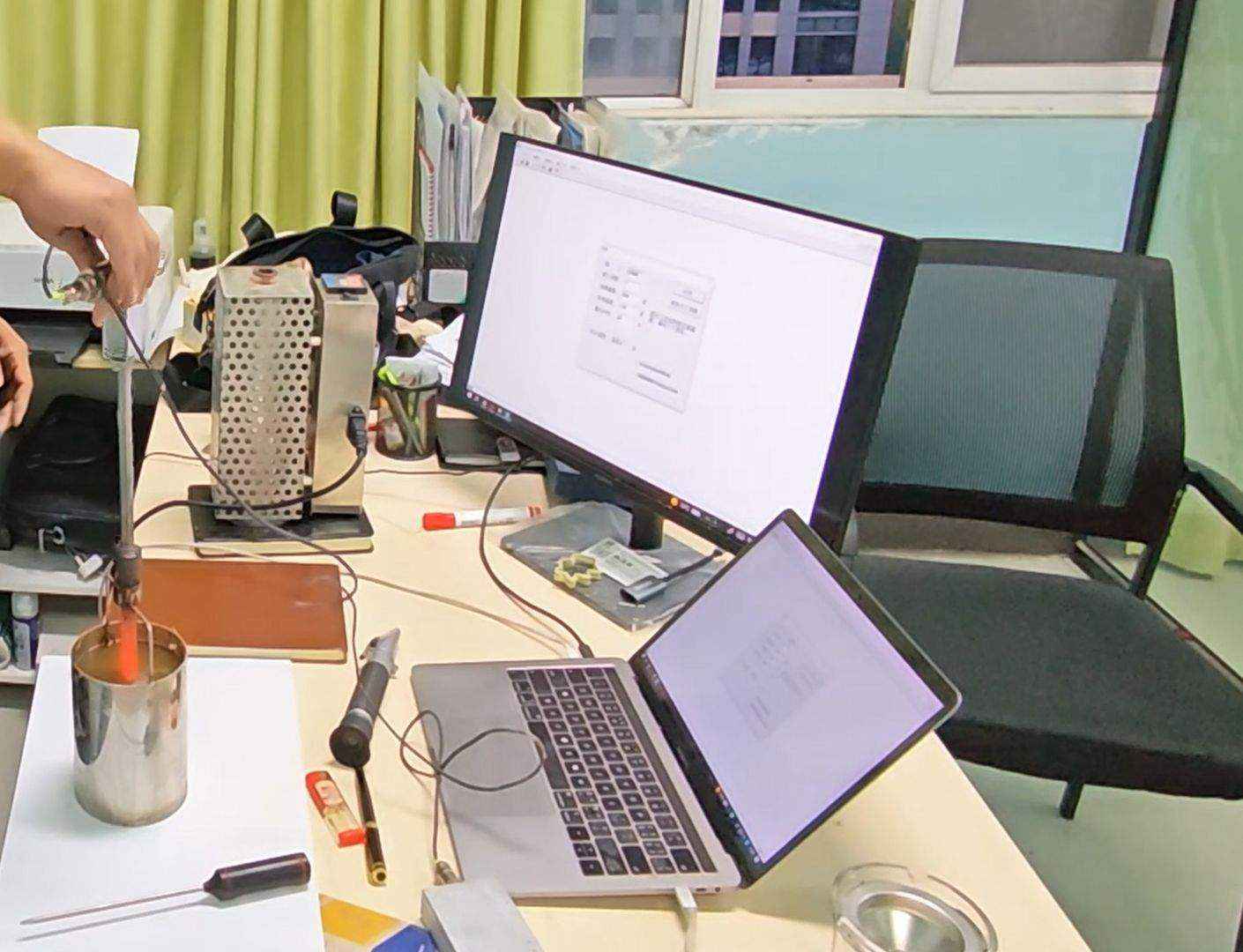
The supplied manual lists ISO 9950, JB/T 7951-2004, JB/T 7951-1999 and SH/T 0220. ISO 9950 is publicly scoped to industrial quenching oils using a nickel-alloy probe tested without relative motion. Aqueous polymer media require an applicable method, probe and relative motion condition; a blanket “ISO 9950 compliant” statement is not sufficient.
Web values and curves apply only to the stated sample, probe, method and condition. They are not a guarantee of microstructure, hardness, distortion or crack-free results for a specific workpiece.
Record product, batch, service age, concentration or condition.
Record standard, probe material/size, heating condition and calibration.
State bath temperature, relative-motion condition or parameter and sampling method.
Retain temperature-time, rate-temperature, characteristic points and the original measurement file.
Answers are bounded by the material, workpiece, equipment and stated test conditions.
No. ISO 9950 is scoped to industrial quenching oils with a nickel-alloy probe tested without relative motion. Aqueous polymer media require an applicable method, probe and relative motion condition.
Identify the sample and batch, method, probe material and size, heating and calibration, bath temperature, concentration or condition, relative motion and the original measurement file.
Send the material grade, dimensions/mass, target properties and current problem. We respond across quenchant, fixture, measurement and process layers.