Sensing
Thermocouple type and installation are selected for the workpiece and temperature zone.
Furnace, bath and internal workpiece temperatures are different signals. Representative production measurements reveal core-surface differences and the actual cooling path.
Thermocouple type and installation are selected for the workpiece and temperature zone.
Representative points are recorded synchronously through heating, soaking, transfer and cooling.
Temperature-time curves, point-to-point differences and batch records are produced.
Channel count, range, accuracy and protection are project-configured and are not fixed before confirmation.
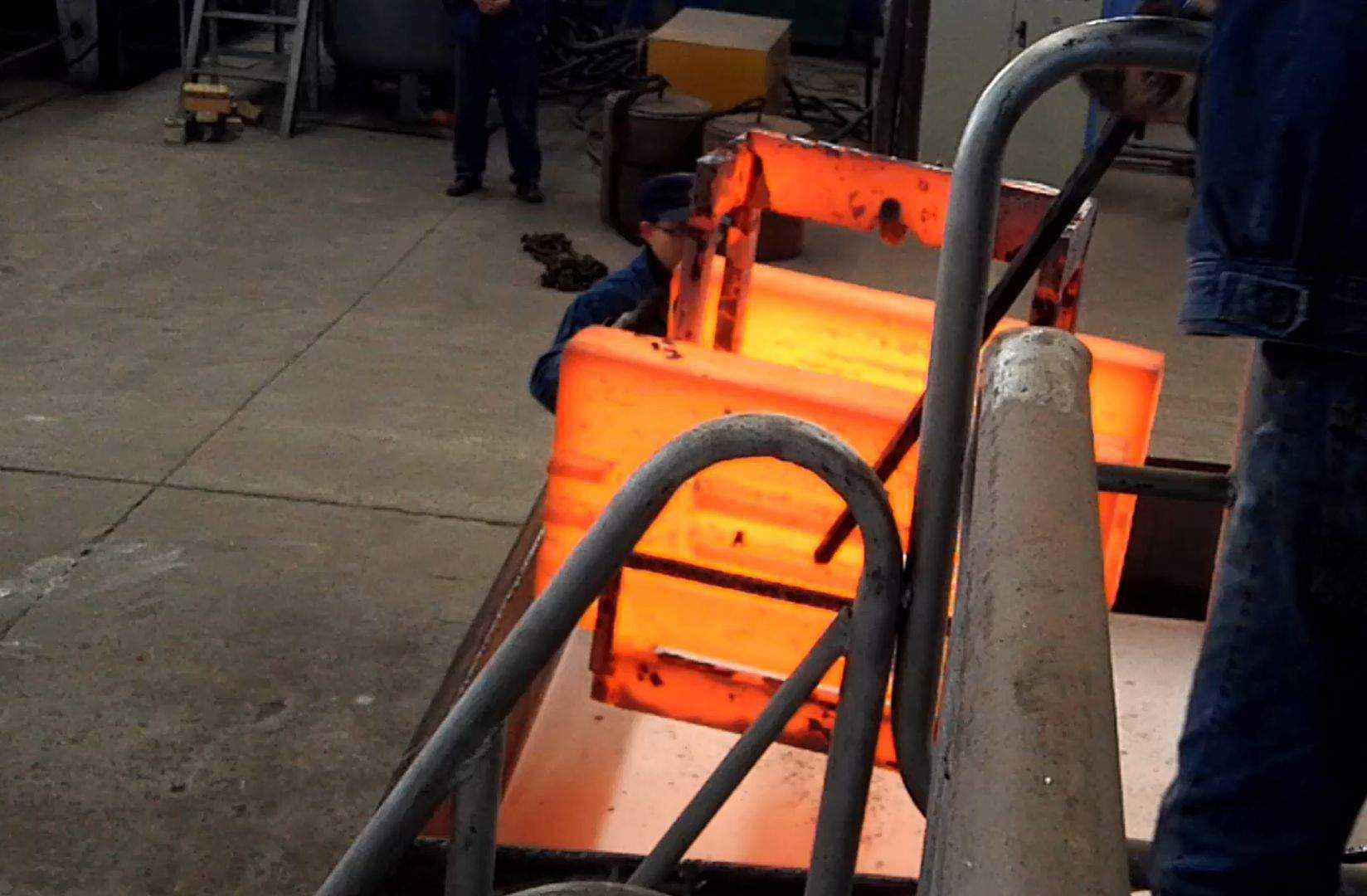
The system can show whether the section reached temperature, when locations enter transformation regions, whether cooling is uniform and what transfer contributes. It supplies process evidence; microstructure, hardness, mechanical properties and dimensions still validate the final result.
Web values and curves apply only to the stated sample, probe, method and condition. They are not a guarantee of microstructure, hardness, distortion or crack-free results for a specific workpiece.
Choose through-heating, soak, transfer, transformation or cooling-uniformity as the main question.
Select core, surface, section transitions, risk zones and references.
Design attachment, sealing and protection for furnace, transfer and immersion.
Associate temperature with batch, medium, fixture, microstructure, hardness and dimensions.
Answers are bounded by the material, workpiece, equipment and stated test conditions.
Furnace temperature does not show the core-surface difference or the actual path during transfer and cooling. Representative points are needed inside the workpiece.
No. Point count, thermocouple type, range, accuracy, attachment and protection are configured from the workpiece and the engineering question.
Send the material grade, dimensions/mass, target properties and current problem. We respond across quenchant, fixture, measurement and process layers.